Thursday, May 31, 2012
Witnessing the Growth of Basic Ecclesial Communities All over the Country
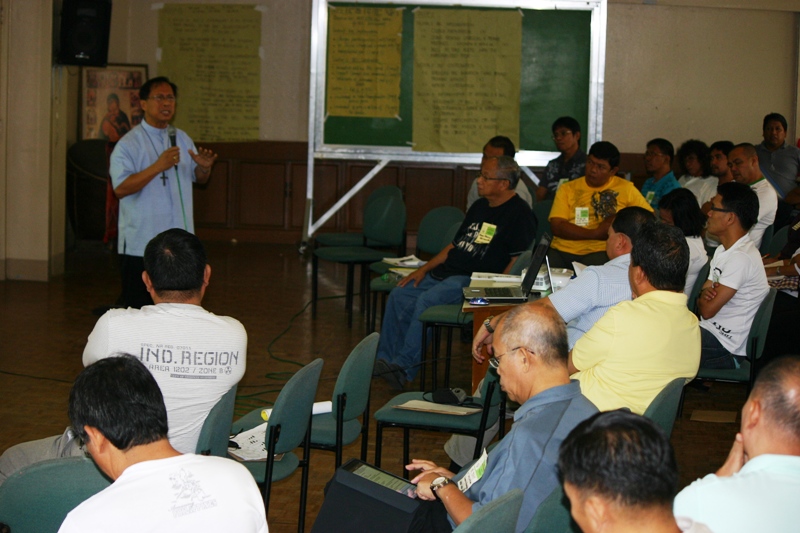
Since I came down from the mountain of Busay last month, I've been doing a lot of traveling in various parts of the country. On the last week of April, I was in Daet, Camarines Norte meeting with the bishop and the BEC director to finalize the format and process of assessing the BECs in the diocese. Then during the first week of May, I flew to Cebu to give the keynote speech of the BEC congress of the Consolacion parish. Archbishop Jose Palma was the principal celebrant of the mass. A few days later I went to Boac, Marinduque to attend the 30th anniversary of the BECs in the diocese. There were over four thousand delegates from the BECs who joined the celebration. I was one of the guest speaker. Then at the middle of the month, I was one of the resource persons of the workshop for the leaders and members of the BEC parish formation teams of the diocese of Kalookan. Then last Saturday, I was the guest speaker of the diocesan BEC day of the Cubao diocese. Two weeks from now, I will be in Cagayan de Oro to conduct a seminar-workshop for the clergy of the archdiocese. A few days later, I will be conducting the workshop for the lay pastoral workers in the archdiocese.
This has been one of the busiest months for me. I spend more time visiting dioceses than in the office. I like this work very much. It gives me the chance to see how BECs continue to flourish all over the country, not just in the rural areas of Mindanao but in the urban areas like Metro-Manila and in traditional areas on Northern Luzon and the Bicol Region. There's so much diversity in terms of approaches, shapes and levels of growth. I will be preparing my report to the bishops who will be gathering here in Manila during the first week of July.
Meanwhile, my training for the marathon has been put on hold due to my busy schedule. I've also been having problems with both my knees - some swelling and pain. I have to use my mountain bike more often. Perhaps, I can bike around Laguna Lake after the CBCP assembly.
Saturday, April 21, 2012
Busay - My Sacred Space
I just came down from the mountain in Busay (Cebu) yesterday after spending four weeks of silence, solitude, prayer, reading, writing, running and singing to myself. Time went so fast - never a dull or boring moment - I didn't want to come down. But I have to go back to my work. I come here every year since I was ordained (I will be celebrating my 31st anniversary 3 days from now). I lived here for 3 months in 1989 before leaving for higher studies in Berkeley and Rome. I spent five months here in 2005 during the first half of my sabbatical. I also spent three months here in 2010 - before and after my walking pilgrimage on the Camino de Santiago in Spain. Well, I'm a part-time hermit and pilgrim. This is a necessity to keep me going in my ministry - otherwise, I will burn-out. This is a very beautiful place - where I fill most at home. Someday, when I turn 75 years old, I will retire here.
Sunday, April 01, 2012
Running and Walking Across the Philippines - first anniversary
One year ago, today, I took the first step on a journey of 2,060 km across the Philippines - from Davao, along the Maharlika highway and via the Cordillera mountain ranges and ending in Aparri. I did it alone, carrying my backpack, without any support vehicle or crew, to preach the message of life and peace in the churches across the country. I fasted during the day and had one full-meal a day (dinner). It took 57 days to cover the distance on foot, mixing walking and running. I rested after every seven days (so actually, 50 full days on the road). I averaged almost a marathon a day (41 km) - with 60 km on the longest day and 23 km on the shortest, 8 to 12 hours a day. I endured in spite the blisters, the cold, the heat, the diarrhea, the rain and Typhoon Chedeng. I was 57 years old and had been diagnosed with myocardial ischemia and atherosclerosis four years before. As I look back on that incredible journey, I still find it hard to believe how I was able to do it. But by God's grace and the kindness of so many people along the way, I reached my destination.
Thirty years ago, when I was a newly-ordained priest running marathons in three and a half hours or more, it was an impossible dream. I couldn't even finish a 90-km adventure run from Iligan to Cagayan due to a knee injury in 1985. But what happened since then was a preparation for this journey of a lifetime. In 1994, I hiked almost 200 km in six days from Rome to Assisi, carrying a backpack and sleeping under the stars at night. After running my slowest marathon in Rome in 1995, I decided to stop running marathons due to a recurring knee injury. So I took up mountain-biking when I returned to the Philippines. In 2000, I biked alone from Davao to Pagudpud, covering 2,080 km in 18 days. In 2006, I biked around Mindanao, covering 2,120 km in 21 days. In 2008, I biked around the Philippines - from Davao to Aparri and back to Davao via the Cordilleras - covering over 5,000 km in 56 days. In 2009, I made a marathon comeback, after 15 years of lay-off from marathoning. It was my slowest marathon - six and a half-hours. In March 2010, I ran-walked across Mindanao - from Davao to Iligan via the Bukidnon mountains - covering almost 400 km in 9 days. Four months later - I ran-walked mostly barefoot from the French Pyrenees across northern Spain along the Camino de Santiago - covering 800 km in 27 days. I knew then that I was ready for my run/walk across the Philippines.
A few others have ran/walked across the country. Cesar Guarin ran with a support vehicle from Zamboanga to Baguio in the 1980s. Fr. Robert Reyes ran across the Philippines by installment - across Mindanao in 1996, around the Visayas in 1997, and across Luzon in 1998 - with support vehicles and accompanied by local runners. Joy Roxas ran from Davao to Pagudpud with Mat Macabe with a support vehicle. I am the only one who did it alone, without a support vehicle or crew and the oldest. This is an accomplishment that I can be most proud of.
I will be a senior citizen two years from now. I have accomplished my "impossible dream." What more should I dream? How about breaking my marathon PR (3:33) which I did in 1983? Well, I can't beat my younger self. Can I? If I can't, at least someday I can win in my age-group division (80 years and above). But I have to resist the temptation of competing and trying to win. I can also do the Camino de Santiago once more - during the next Xacobeo in 2021 - but this time continue on to Muxia.
Before I forget, here's a link to the photo-video of my journey across the Philippines.
http://www.youtube.com/embed/o9mg-yULbDQ
Thirty years ago, when I was a newly-ordained priest running marathons in three and a half hours or more, it was an impossible dream. I couldn't even finish a 90-km adventure run from Iligan to Cagayan due to a knee injury in 1985. But what happened since then was a preparation for this journey of a lifetime. In 1994, I hiked almost 200 km in six days from Rome to Assisi, carrying a backpack and sleeping under the stars at night. After running my slowest marathon in Rome in 1995, I decided to stop running marathons due to a recurring knee injury. So I took up mountain-biking when I returned to the Philippines. In 2000, I biked alone from Davao to Pagudpud, covering 2,080 km in 18 days. In 2006, I biked around Mindanao, covering 2,120 km in 21 days. In 2008, I biked around the Philippines - from Davao to Aparri and back to Davao via the Cordilleras - covering over 5,000 km in 56 days. In 2009, I made a marathon comeback, after 15 years of lay-off from marathoning. It was my slowest marathon - six and a half-hours. In March 2010, I ran-walked across Mindanao - from Davao to Iligan via the Bukidnon mountains - covering almost 400 km in 9 days. Four months later - I ran-walked mostly barefoot from the French Pyrenees across northern Spain along the Camino de Santiago - covering 800 km in 27 days. I knew then that I was ready for my run/walk across the Philippines.
A few others have ran/walked across the country. Cesar Guarin ran with a support vehicle from Zamboanga to Baguio in the 1980s. Fr. Robert Reyes ran across the Philippines by installment - across Mindanao in 1996, around the Visayas in 1997, and across Luzon in 1998 - with support vehicles and accompanied by local runners. Joy Roxas ran from Davao to Pagudpud with Mat Macabe with a support vehicle. I am the only one who did it alone, without a support vehicle or crew and the oldest. This is an accomplishment that I can be most proud of.
I will be a senior citizen two years from now. I have accomplished my "impossible dream." What more should I dream? How about breaking my marathon PR (3:33) which I did in 1983? Well, I can't beat my younger self. Can I? If I can't, at least someday I can win in my age-group division (80 years and above). But I have to resist the temptation of competing and trying to win. I can also do the Camino de Santiago once more - during the next Xacobeo in 2021 - but this time continue on to Muxia.
Before I forget, here's a link to the photo-video of my journey across the Philippines.
http://www.youtube.com/embed/o9mg-yULbDQ
Wednesday, March 14, 2012
The Necessity of Prayer and Meditation
(A very busy week. I have a BEC workshop tomorrow with the clergy of Kalookan diocese, then attend the Summit on Good Governance, then be one of the speakers for the recollection for priests organized by the Clergy Discerment group. I look forward to spend time in solitude, silence and prayer. Ten more days to go, before I leave for Cebu and spend time alone in my "hermitate" in the mountain of Buay for a month followed by a BEC workshop. I am sharing here my column which will be published in the CBCP monitor.)
The Necessity of Prayer and Meditation
“I’m just too busy with my work, I don’t have time to pray.” “I really want to pray but when right time comes, I am just too exhausted to do it.” “Anyway, my work is my prayer.” Or “I have already gone to Mass and joined the community in reciting the Divine Office, so that’s enough.”
These are the usual excuses of many priests, religious and lay people for failing to find time to pray and meditate alone. Yes, our work or ministry can be so demanding that it depletes our energy. We do so much - preaching and teaching, conducting evangelization seminars, forming Basic Ecclesial Communities, caring for the sick, the poor and the needy, working for peace and justice, protecting the environment, etc. We get tired and feel the need to relax. So when we have free time we spend it watching TV or the movies, surfing the internet and checking our Facebook, or going out with friends for a drink or a good meal. We don’t feel the need to pray or meditate.
Besides reminding us of our responsibility to care for our neighbor in need and do penitential acts, the Lenten season is the time that we are invited to spend more time in prayer. We are called to follow the example of Christ who went out to the desert or up the mountain to pray in spite of his busy schedule preaching the Good News and responding to the needs of the poor, the sick, the hungry and possessed by evil. Well, there is actually no need to climb Mt. Apo or Mt. Banahaw or go to the arid and sandy hills of Ilocos. The desert and the mountain symbolize the time and space that we need to set aside for silence, solitude and prayer. We just have to find our own sacred space and time for this.
Why is this necessary? Unless we find time for this, we will burn out. Without this, we cannot sustain our life’s journey, our ministry, our mission. We get exhausted, we deplete our energy. The TV, the movies, the internet and other forms of relaxation are not enough to revitalize or recharge us. It is during the time of solitude, silence, prayer and meditation that we are truly energized by the ultimate source – the Triune God. Thus, this keeps us in touch with the source of our energy, power and dynamism. The time we spend in prayer and meditation deepens our intimacy and friendship with God – with the loving Father, with the risen Lord and with the Spirit that empowers us for mission.
Besides the spiritual effect, it also benefits our body and mind. It even changes our brain according to some neuro-scientists who have done studies and experiments using functional MRI on those who pray and meditate (including Catholic nuns using Centering Prayer). We enter into state of relaxation and healing. It brings about stress-relief. High-blood pressure can go down through regular meditation. In their book, “Your Mind at its Best” Doctors Biebel and Dill report: ‘It has become an undisputed fact that prayer and meditation actually alter the brain in ways that promote physical, emotional, cognitive and relational health.” Dr. Andrew Newberg also illustrates “how spiritual practices like intense prayer and meditation improve memory, cognition, and compassion while suppressing undesirable responses like anger, depression and anxiety.” Prayer and meditation activates the anterior cingulate of the brain that is identified with the capacity for empathy and compassion and which develops a sense of peace and comfort.
Thus, if we want to be more effective and long-lasting in our work and ministry, we have to spend time in prayer and meditation. We should do this not only during Lent but as part of the rhythm of our life –daily, weekly, monthly, and longer periods.
Of course, we cannot spend our entire life on top of the mountain or in the desert. We need to continue our journey and mission, but we need to regularly spend time on top of the mountain. What is important is to integrate action and contemplation, praxis and prayer. This is what a holistic and integral spirituality is all about.
The Necessity of Prayer and Meditation
“I’m just too busy with my work, I don’t have time to pray.” “I really want to pray but when right time comes, I am just too exhausted to do it.” “Anyway, my work is my prayer.” Or “I have already gone to Mass and joined the community in reciting the Divine Office, so that’s enough.”
These are the usual excuses of many priests, religious and lay people for failing to find time to pray and meditate alone. Yes, our work or ministry can be so demanding that it depletes our energy. We do so much - preaching and teaching, conducting evangelization seminars, forming Basic Ecclesial Communities, caring for the sick, the poor and the needy, working for peace and justice, protecting the environment, etc. We get tired and feel the need to relax. So when we have free time we spend it watching TV or the movies, surfing the internet and checking our Facebook, or going out with friends for a drink or a good meal. We don’t feel the need to pray or meditate.
Besides reminding us of our responsibility to care for our neighbor in need and do penitential acts, the Lenten season is the time that we are invited to spend more time in prayer. We are called to follow the example of Christ who went out to the desert or up the mountain to pray in spite of his busy schedule preaching the Good News and responding to the needs of the poor, the sick, the hungry and possessed by evil. Well, there is actually no need to climb Mt. Apo or Mt. Banahaw or go to the arid and sandy hills of Ilocos. The desert and the mountain symbolize the time and space that we need to set aside for silence, solitude and prayer. We just have to find our own sacred space and time for this.
Why is this necessary? Unless we find time for this, we will burn out. Without this, we cannot sustain our life’s journey, our ministry, our mission. We get exhausted, we deplete our energy. The TV, the movies, the internet and other forms of relaxation are not enough to revitalize or recharge us. It is during the time of solitude, silence, prayer and meditation that we are truly energized by the ultimate source – the Triune God. Thus, this keeps us in touch with the source of our energy, power and dynamism. The time we spend in prayer and meditation deepens our intimacy and friendship with God – with the loving Father, with the risen Lord and with the Spirit that empowers us for mission.
Besides the spiritual effect, it also benefits our body and mind. It even changes our brain according to some neuro-scientists who have done studies and experiments using functional MRI on those who pray and meditate (including Catholic nuns using Centering Prayer). We enter into state of relaxation and healing. It brings about stress-relief. High-blood pressure can go down through regular meditation. In their book, “Your Mind at its Best” Doctors Biebel and Dill report: ‘It has become an undisputed fact that prayer and meditation actually alter the brain in ways that promote physical, emotional, cognitive and relational health.” Dr. Andrew Newberg also illustrates “how spiritual practices like intense prayer and meditation improve memory, cognition, and compassion while suppressing undesirable responses like anger, depression and anxiety.” Prayer and meditation activates the anterior cingulate of the brain that is identified with the capacity for empathy and compassion and which develops a sense of peace and comfort.
Thus, if we want to be more effective and long-lasting in our work and ministry, we have to spend time in prayer and meditation. We should do this not only during Lent but as part of the rhythm of our life –daily, weekly, monthly, and longer periods.
Of course, we cannot spend our entire life on top of the mountain or in the desert. We need to continue our journey and mission, but we need to regularly spend time on top of the mountain. What is important is to integrate action and contemplation, praxis and prayer. This is what a holistic and integral spirituality is all about.
Wednesday, February 15, 2012
The Search for Truth & Accountability: Moral Perspective on Corona Impeachment Trial
(I am sharing here an article which I wrote for my column that will be published in the CBCP Monitor this week)
How does the Church view the current impeachment proceeding of Chief Justice Renato Corona? One of the questions raised in many discussion forum in the internet is why the Church is silent about it. On the other hand, there is an impression that Corona has the support and blessing of the Church. The novena-masses in the Supreme Court in support of the chief justice nine successive days before the start of the impeachment proceeding contributed to this impression. Ordinarily, novena-masses are celebrated only in churches and chapels before the fiesta of a patron saint and before Christmas (misa de gallo). Holding novena-masses in a government building and in support of a government official accused of betrayal of public trust and corruption has never been done before and is highly questionable. It leads to questions about separation of Church and State and about the abuse of the Eucharist.
At the start of the Corona Impeachment trial, Senator Gringo Honasan appealed to the CBCP “to provide the people with moral guidelines about the trial to help them reflect on the current issue from the light of the Christian faith.”
The CBCP as a body has not come up with an official statement or pastoral letter about the impeachment proceeding. Many bishops see this as a purely political process which does not involve any matter regarding faith and morals. From this perspective there is no moral evil involved, so there is no urgent need to exercise a prophetic function or come up with moral guidelines. Thus, the most prudent position is to remain in the sidelines and allow this impeachment process to run its course. The bishops hope for a speedy impeachment trial that would redound to the common good. Many bishops expressed concern that a drawn up impeachment proceeding would distract the government’s attention from addressing the pressing problems of the people – especially poverty. Thus, according to the CBCP monitor: “The Catholic Bishops’ Conference of the Philippines stressed that while they support government’s campaign against corruption, it must not also forget its obligations to the Filipinos.”
In an interview, Archbishop Jose Palma, the CBCP president said: “We exhort the people to give their respect and trust to the senator-judges and, of course, our respect and trust in the Constitutional processes…We exhort our brothers and sisters, fellow Filipinos, to pray, study and to do whatever is legally or morally possible so that truth and justice will be attained or realized. We exhort the people to pray especially for wisdom and guidance.”
The CBCP president focuses on the key themes: (1) Respect and trust to the senator-judges and the constitutional processes. (2) The attainment of truth and justice.
All these must be done in the context of the support for the campaign against corruption and the attainment of the common good. Besides truth and justice, accountability should be stressed.
The CBCP several years ago came out with a pastoral letter which deplored corruption in Philippine society as a moral evil that needs to be eradicated. In my opinion, the impeachment proceeding should be seen from this broader moral perspective. There is a clamor of the vast majority of the people to root out the cancer of corruption that has permeated all levels of Philippine society, to search for the truth about the involvement of government officials involved in corruption and to hold them accountable. This is the mandate that the people has given to the present administration. The Church must support this campaign to eradicate the culture of corruption and impunity – the moral evil which has perpetuated poverty, injustice, inequality, destruction of the environment and violence.
The impeachment proceeding against CJ Corona can be viewed as an effort to search for truth and accountability. It is not an attack against the independence of the judiciary. The chief justice stands accused of being beholden to the former president Gloria Macapagal Arroyo – placed by her by midnight appointment to protect her when the time of reckoning comes. He also stands accused of betrayal of public trust and of corruption. He should face these charges. If he has nothing to hide, then he should allow the impeachment court to see his dollar accounts.
Any attempt to stop the impeachment proceeding by a TRO imposed by his supportive colleagues within the Supreme Court should be opposed and condemned. The Supreme Court does not have the moral high ground at present. It is not only the Chief Justice who is suspected of being corrupted and compromised by the former president.
The search for truth and accountability should go beyond the impeachment proceeding. This will include former government officials as well the present ones in all levels – from the judiciary, to the legislative and the executive branches, in the government bureaucracy from the highest to the lowest levels, in the police and in the military. In the end, even the prosecutors themselves and our president should see to it that they are beyond reproach. This will require a moral transformation and reformation in our society. In supporting this moral crusade against corruption, the Church must also make sure that she is beyond reproach.
“The Lord will not abandon his people; he will not desert those who belong to him. Justice will again be found in the courts, and all righteous people will support it...
You have nothing to do with corrupt judges, who make injustice legal...
He will punish them for their wickedness and destroy them for their sins; the Lord our God will destroy them. (Psalm 94:14-15, 20-23)
(p.s. this column expresses the personal opinion of the writer as a citizen and a priest-theologian)
How does the Church view the current impeachment proceeding of Chief Justice Renato Corona? One of the questions raised in many discussion forum in the internet is why the Church is silent about it. On the other hand, there is an impression that Corona has the support and blessing of the Church. The novena-masses in the Supreme Court in support of the chief justice nine successive days before the start of the impeachment proceeding contributed to this impression. Ordinarily, novena-masses are celebrated only in churches and chapels before the fiesta of a patron saint and before Christmas (misa de gallo). Holding novena-masses in a government building and in support of a government official accused of betrayal of public trust and corruption has never been done before and is highly questionable. It leads to questions about separation of Church and State and about the abuse of the Eucharist.
At the start of the Corona Impeachment trial, Senator Gringo Honasan appealed to the CBCP “to provide the people with moral guidelines about the trial to help them reflect on the current issue from the light of the Christian faith.”
The CBCP as a body has not come up with an official statement or pastoral letter about the impeachment proceeding. Many bishops see this as a purely political process which does not involve any matter regarding faith and morals. From this perspective there is no moral evil involved, so there is no urgent need to exercise a prophetic function or come up with moral guidelines. Thus, the most prudent position is to remain in the sidelines and allow this impeachment process to run its course. The bishops hope for a speedy impeachment trial that would redound to the common good. Many bishops expressed concern that a drawn up impeachment proceeding would distract the government’s attention from addressing the pressing problems of the people – especially poverty. Thus, according to the CBCP monitor: “The Catholic Bishops’ Conference of the Philippines stressed that while they support government’s campaign against corruption, it must not also forget its obligations to the Filipinos.”
In an interview, Archbishop Jose Palma, the CBCP president said: “We exhort the people to give their respect and trust to the senator-judges and, of course, our respect and trust in the Constitutional processes…We exhort our brothers and sisters, fellow Filipinos, to pray, study and to do whatever is legally or morally possible so that truth and justice will be attained or realized. We exhort the people to pray especially for wisdom and guidance.”
The CBCP president focuses on the key themes: (1) Respect and trust to the senator-judges and the constitutional processes. (2) The attainment of truth and justice.
All these must be done in the context of the support for the campaign against corruption and the attainment of the common good. Besides truth and justice, accountability should be stressed.
The CBCP several years ago came out with a pastoral letter which deplored corruption in Philippine society as a moral evil that needs to be eradicated. In my opinion, the impeachment proceeding should be seen from this broader moral perspective. There is a clamor of the vast majority of the people to root out the cancer of corruption that has permeated all levels of Philippine society, to search for the truth about the involvement of government officials involved in corruption and to hold them accountable. This is the mandate that the people has given to the present administration. The Church must support this campaign to eradicate the culture of corruption and impunity – the moral evil which has perpetuated poverty, injustice, inequality, destruction of the environment and violence.
The impeachment proceeding against CJ Corona can be viewed as an effort to search for truth and accountability. It is not an attack against the independence of the judiciary. The chief justice stands accused of being beholden to the former president Gloria Macapagal Arroyo – placed by her by midnight appointment to protect her when the time of reckoning comes. He also stands accused of betrayal of public trust and of corruption. He should face these charges. If he has nothing to hide, then he should allow the impeachment court to see his dollar accounts.
Any attempt to stop the impeachment proceeding by a TRO imposed by his supportive colleagues within the Supreme Court should be opposed and condemned. The Supreme Court does not have the moral high ground at present. It is not only the Chief Justice who is suspected of being corrupted and compromised by the former president.
The search for truth and accountability should go beyond the impeachment proceeding. This will include former government officials as well the present ones in all levels – from the judiciary, to the legislative and the executive branches, in the government bureaucracy from the highest to the lowest levels, in the police and in the military. In the end, even the prosecutors themselves and our president should see to it that they are beyond reproach. This will require a moral transformation and reformation in our society. In supporting this moral crusade against corruption, the Church must also make sure that she is beyond reproach.
“The Lord will not abandon his people; he will not desert those who belong to him. Justice will again be found in the courts, and all righteous people will support it...
You have nothing to do with corrupt judges, who make injustice legal...
He will punish them for their wickedness and destroy them for their sins; the Lord our God will destroy them. (Psalm 94:14-15, 20-23)
(p.s. this column expresses the personal opinion of the writer as a citizen and a priest-theologian)
Friday, January 27, 2012
Attending an assembly of the CBCP/ Giving a talk on "The Word of God and Basic Ecclesial Communities"
Since last Tuesday (Jan. 24), the Catholic bishops coming from 86 dioceses all over the Philippines gathered at the Pius XII center for their regular assembly. The executive secretaries from various episcopal committee and commissions were also invited - that includes me. The first day was devoted to listening to the results of the study on the diocesan plans and how they reflect the vision-mission and priorities of the second Plenary Council of the Philippines (PCP II). The study was conducted by research centers coming from various Catholic universities all over the Philippines. Among others, the study show that "Basic Ecclesial Communities - BECs" ranked 3rd in the adoption of PCP II priorities reflected in the diocesan plans.
One the second day, 3 bishops gave talks on Benedict XVI's "Verbum Domini" - the Word of God in the Life and Mission of the CHurch. Yesterday, the 3rd day of the gathering, several executive secretaries gave presentations on the relation of the Word of God to various specific dimensions/priorities of the Church (Catechetics, Liturgy, Youth, Social Action, Social Communications, BECs). I gave a 45 minutes presentation on the topic: "The Word of God and Basic Ecclesial Communities" followed by 15 minutes open forum in the afternoon. I was nervous at first, since this was the first time I have given a talk to the bishops (except for the 10 minutes BEC committee report I gave last July 2010). But I was encouraged by the attentiveness and interest of the bishops.
Tomorrow, the bishops will be listening to the reports from various commissions, followed by discussion on several concerns.
I will be meeting the members of the National BEC team (headed by Bishop George Rimando) immediately after the CBCP assembly on Wednesday.
Sunday, January 22, 2012
Faith and Personal Renewal (Mk 1:14-20)
I've been back here in Baclaran since last week. This morning I presided at the 9 am mass and this is what I preached:
"The kingdom of God is at hand, repent and believe in the Gospel"
We often take pride that the Philippines is the only predominantly Christian country in Asia. Around 82 percent of the population are Catholics.
Majority of our people are deeply religious, with deep faith in God and devotion to the our Blessed Mother Mary and the saints –
We have the longest Christmas season – at least we can already hear Christmas songs as early as September and we are the only country that celebrates the Misa de Gallo – the nine early dawn masses before Christmas.We have the biggest procession – the Nazareno which was attended by over 7 million devotees and took 22 hours.
We have the largest attended Novena to the Perpetual Help here in Baclaran – over a hundred thousand come this church every Wednesday.
We have masses not only in churches but in shopping malls and in government offices – including the Supreme Court where a novena of masses were celebrated before the start of the impeachment of Chief Justice Corona.
Yet, in spite this widespread religiosity and deep faith, we wonder why there is so much evil and suffering in our country.
Majority of our people are poor, there is so much inequality, our crime rate is high, there is so much violence all around us, and many families are breaking down.
The Philippines has a reputation of being one the most corrupt country in Asia.
Two corrupt presidents have been removed by people power and now we have former president Gloria Macapagal Arroyo (known for her piety) under hospital arrest, awaiting trial for election sabotage and plunder. The Chief Justice of the Supreme Court – Renato Corona (a product of a Jesuit University) has been impeached and is now being tried in the senate. There is a generals who have been imprisoned due to corruption (and he is now a lay Eucharistic minister inside). This week the chief of the NBI (national bureau of investigation) accused of kidnapping.
So, why is this? There appears to be a gap between what we believe (faith), and how we live (our morality).
The response that Jesus expects in proclaiming the good news of the Kingdom is repetance and faith – which are preconditions for discipleship.
What Jesus emphasizes is not only faith or belief but also repentance – which is a translation of the original Greek word metanoia.
Metanoia is not only a matter of being aware of our sinfulness and of being sorry for our sins.
It involves a deeper change in our attitude, our life and lifestyle – a turning around. This means moving from darkness to light, turning away from sin and becoming the best person that God wants us to be. It means becoming renewed.
Yes, our faith may be deep. Most of us already believe. But there is something that is lacking.
What the Lord wants of us is to repent, to change our life for the better, to reject sin and evil, to overcome the dark side of ourselves, to get rid of, our selfishness, greed and pride, our addictions,
to cleanse ourselves and become the best version of ourselves –
to be more loving, compassionate, just, truthful, honest and holy.
When we do this, we become true Christians – genuine disciples and followers of Jesus.This can be concretely expressed by going to confession.
But this is only the first step. What matters most is the day to day struggle to overcome the dark side and to live in the light. It is not only what we do inside the church that is important - it is what we also do outside the church, in our homes, our neighborhood, community, schools and workplace.
There can only be true social transformation when each one of us – including those who call themselves public servants – can respond to the call to repentance and personal renewal.
Saturday, December 31, 2011
Davao to Iligan by Motorbike, Seeing the effects of Typhoon Sendong
I arrived here in Iligan yesterday, on a motorbike (instead of the usual mountain bike) from Davao via the mountains of Davao and Bukidnon.
Upon crossing the new Hinaplanon bridge, I saw some of the devastation of the flashflood caused by Typhoon Sendong two weeks ago. Over a thousand people perished. Many of those who survived are now homeless.
Our monastery in Iligan was also hit by the flood but it was only knee deep. The computers, an LCD projector and the files have been destroyed. Major repairs need to be done on the ground floor of the monastery and the old novitiate building. Meanwhile, some members of the Redemptorist community are involved in relief operations. Some of the relief goods keep coming, and they have to be sent to the relief centers of the diocese and the city.
There are two families who are living at the second floor of the seminar house - they survived the flood but their homes have been destroyed. One of them is the family of Eugenio - our retired sacristan & driver. The other is the family of Dodoy - our former lay vocation promoter. Dodoy told me that a few minutes after they escaped to higher ground, the waters from the overflowing river reached the roof level of their house. His wife, Joy, said that the members of the neighborhood BEC cells survived because they urged one another that it was time to evacuate immediately.
Tonight, I will be celebrating the coming of the New Year tonight with my sisters and their families, thinking of those who will be greeting the New Year in the evacuation centers.
Sunday, December 25, 2011
Christmas 2011 in Davao: The Gift of a Piano
This is the 16th Christmas that I celebrated here in Davao (starting in 1995), but this time I celebrate it not as a member of the Redemptorist community but as a visitor or guest. Last night, I concelebrated at the 10 pm Christmas vigil mass presided by Fr. Mario Masangcay.
Tonight, we had our Christmas party with the senior Redemptorist community and the Redemptorist theology students. We had lechon, turkey and lots of drinks - wine, whisky, brandy, bailey, liquer, punch. With all these 'spirits' I recommended a "discernment" of "spirits". Everyone was in a jolly mood after eating and drinking too much, and after receiving their gifts.
Tonight, I gave to the Redemptorist Formation Community a very expensive and valuable gift - the "certificate of ownership" of the Weinstein piano. It's not really a new piano. I bought it 16 years ago after receiving a share of my inheritance from my late mother's estate. I was planning to bring the piano with me wherever I was assigned - and even bring it with me to my hermitage in Busay when I retire. After my death, the piano will be donated to the Davao Redemptorist Formation community. However, after I was assigned to the CBCP in Manila, and ran/walked across the Philippines to my new assignment, I thought it was too heavy to bring with me. So, I decided to just give the piano as a gift to the community instead of making them wait for 30-40 years. So tonight during the Christmas party, I thought this was the opportune time to give it to them.
I still have a long journey ahead of me. A pilgrim has to travel light. I cannot bring the piano with me.
Friday, December 23, 2011
Misa de Gallo at the Redemptorist Church in Davao
This morning at 4:30, I was the presider of the 8th day of the Misa de Gallo - the traditional early dawn mass. . As early as 3:30 am, the church was already full and many had to stand outside, as far as the car park. There were many young people around. After the mass, many stayed around to partake of the delicacies - puto bumbong, tsokolate, etc.
I'm so glad to spend my Christmas here in Davao.
Thursday, December 22, 2011
Burial of My Cousin, Victim of Typhoon Sendong
Last Sunday, I heard the news that Typhoon Sendong hit Cagayan and Iligan and caused a flash flood which resulted in the death of over a thousand people. Hundreds remain missing. Thousands of families were left homeless. I was worried about my sisters, relatives, confreres and friends in Iligan. I was relieved to hear that they were safe although the flood was only knee deep in their houses. The Redemptorist church was also flooded so the Misa de Gallo was cancelled. But the others who were living along the Mandolog river and Bayug island were not as fortunate.
Later that day, I got a call from my cousin Nene telling me that her younger brother - Arthur was one of those who perished in the flood in Cagayan de Oro. My cousin Arthur had a stroke several months ago and he was wheel-chair bound. So when the flood began to rise rapidly inside their house he panicked as the water rose to his neck level. His children rushed and tried to bring him up to the rooftop but it was too late, he was suffering from hypothermia and had a heart attack. He was only 53 years old. His family and relatives were distraught with grief. They were more fortunate than the entire families that perished and there was no one to claim their bodies or attend their burial.
I arrived in Cagayan last Tuesday evening and as I was walking on the bridge across the Cagayan river, I could smell the stench of death below me. The houses along the river bank below had been destroyed and there were still bodies under the debris.
When we arrived at chapel of the Greenhills memorial park, there was a funeral mass that was just finishing. We were able to celebrate the funeral mass for Arthur at 9:30 am and bury him by 10:15. We were told that almost every hour every day for the next few days until Christmas there will be burial - mostly victims of Typhoon Sendong. I heard that elsewhere unclaimed decomposing bodies will be buried in mass graves.
I met my sisters and cousins from Iligan who came to attend the funeral and burial of Arthur. They told me about the devastation caused by the typhoon and the flood in our city. The most gruesome story was about the people who took refuge in the second floor of a big concrete house. They thought they were already safe but the water rose and a huge log from the river hit the house and killed all of them.
Apparently most of the water came from the mountains of Bukidnon and Lanao del Sur. When the typhoon came, there were no more forest and watershed that could absorb the heavy rainfall. They have been replaced by pineapple plantations, farms, meadows for cattle, golf courses and housin subdivision. So the topsoil and the water quickly came down to the cities of Cagayan and Iligan. Some of the illegally cut logs rushed down and hit so many people. What was surprising was that Northern Mindanao - including Cagayan and Iligan never experienced being hit by a typhoon before. Climate change.
Natural disasters are often called "Acts of God." This is a blasphemy! God is not responsible for Typhoon Sendong and the flashfloods that killed so many people and left many more homeless. This is the result of the greed of human beings and corporations who destroy the environment, who are responsible for the ecological imbalance. Mother nature does not forget. And that will not be the last.
Almost 25 years ago, when we organized and mobilized the Basic Ecclesial Communities of San Fernando and the neighboring parishes to stop logging in Bukidnon we were aware that a total log ban and reforestation would benefit not only the villages of Bukidnon but also the coastal cities of Northern Mindanao. An ecologist from an NGO had informed us that without the forest, the coastal cities will someday be inundated by flashflood coming from the mountain ranges of Bukidnon and Lanao del Sur. The Aquino government declared a total log ban in Bukidnon in 1988, but that did not stop the logging especially in the ARMM - in Lanao del Sur. By then the whole of Bukidnon have become one large pinapple plantation, grasslands for cattle, and farms. The big capitalists, loggers and agribusiness have earned huge profits from destroying the environment. It is the ordinary people, especially the poor who pay for their sins. And they call this "act of God?"
Wednesday, December 14, 2011
Impeaching Chief Justice Corona, Prosecuting Gloria Macapagal Arroyo
Early this morning, I received this text message: "14 Dec, 2 pm @d SC, CJ Corona will address current issues affecting d entire judiciary. All r encouraged to attend & wear black. lets all wear black 2 pls pass."
This message is an invitation to attend a rally in the Supreme Court to support Chief Justice Renato Corona who has recently been impeached by the house of Representatives and will face trial in Senate next month. I presume this comes from the office of the SC spokesman Midas Marquez. This is probably the same text message that judges and court employees received, that is why there is a court holiday today.
Of course, no way will I attend the protest rally in the SC. CJ RENATO CORONA DOES NOT HAVE MY SUPPORT. I fully support the move to impeach him and oust him from his position as chief injustice. I hope he resigns rather than face humiliation and disgrace.
Renato Corona was the chief of staff, spokesman, executive secretary of Gloria Macapagal Arroyo - one of the most corrupt and abusive president we ever had - next to the dictator Ferdinand Marcos. His position made him an alter-ego of Gloria. It was on this basis that he was appointed associate justice of the Supreme Court and later Chief Justice of the Supreme Court a few days after the election of the new President Benigno Aquino III. This was clearly in violation against midnight appointment. This move has been interpreted as a way to protect the outgoing president GMA. He was appointed not because of his competence, probity and independence but because of his loyalty to Arroyo.
His decisions since then show a pattern of protecting his patronness. He and his 7 cohorts (the so-called Arroyo court) has been an obstruction to justice - a hindrance to the reform agenda of the new government, blocking attempts at holding Gloria Macapagal Arroyo accountable for her crimes against the Filipino people. The recent SWS survey show that he is the least trusted among the high office holders of the land.
Through his spokesman, he has the gall to say that the impeachment proceeding is an attack against the judiciary and can lead to a constitutional crisis. I prefer to see this is an act of cleansing the judiciary and restoring its credibility. As of now, Corona and his cohorts has the contempt of the majority of our people. For as long as Corona stay, the Supreme Court will remain a damaged institution. I hope that the impeachment will not stop with Corona - but will later include the other associate justices who are beholden to Arroyo and who have been corrupted.
There are some things that I don't agree with President Aquino and which I oppose - like his pro-RH stance and his pro-mining policy. But I fully support his anti-corruption and reform agenda: starting with the campaign to make Gloria Arroyo and her minions (including Corona) accountable for their acts.
I don't believe that PNoy is an autocrat or a Fidel Castro. I wonder why those who say this did not say anything when Gloria Macapagal Arroyo acted like a corrupt autocrat and controlled the judiciary and congress.
This message is an invitation to attend a rally in the Supreme Court to support Chief Justice Renato Corona who has recently been impeached by the house of Representatives and will face trial in Senate next month. I presume this comes from the office of the SC spokesman Midas Marquez. This is probably the same text message that judges and court employees received, that is why there is a court holiday today.
Of course, no way will I attend the protest rally in the SC. CJ RENATO CORONA DOES NOT HAVE MY SUPPORT. I fully support the move to impeach him and oust him from his position as chief injustice. I hope he resigns rather than face humiliation and disgrace.
Renato Corona was the chief of staff, spokesman, executive secretary of Gloria Macapagal Arroyo - one of the most corrupt and abusive president we ever had - next to the dictator Ferdinand Marcos. His position made him an alter-ego of Gloria. It was on this basis that he was appointed associate justice of the Supreme Court and later Chief Justice of the Supreme Court a few days after the election of the new President Benigno Aquino III. This was clearly in violation against midnight appointment. This move has been interpreted as a way to protect the outgoing president GMA. He was appointed not because of his competence, probity and independence but because of his loyalty to Arroyo.
His decisions since then show a pattern of protecting his patronness. He and his 7 cohorts (the so-called Arroyo court) has been an obstruction to justice - a hindrance to the reform agenda of the new government, blocking attempts at holding Gloria Macapagal Arroyo accountable for her crimes against the Filipino people. The recent SWS survey show that he is the least trusted among the high office holders of the land.
Through his spokesman, he has the gall to say that the impeachment proceeding is an attack against the judiciary and can lead to a constitutional crisis. I prefer to see this is an act of cleansing the judiciary and restoring its credibility. As of now, Corona and his cohorts has the contempt of the majority of our people. For as long as Corona stay, the Supreme Court will remain a damaged institution. I hope that the impeachment will not stop with Corona - but will later include the other associate justices who are beholden to Arroyo and who have been corrupted.
There are some things that I don't agree with President Aquino and which I oppose - like his pro-RH stance and his pro-mining policy. But I fully support his anti-corruption and reform agenda: starting with the campaign to make Gloria Arroyo and her minions (including Corona) accountable for their acts.
I don't believe that PNoy is an autocrat or a Fidel Castro. I wonder why those who say this did not say anything when Gloria Macapagal Arroyo acted like a corrupt autocrat and controlled the judiciary and congress.
Wednesday, November 30, 2011
Back to Davao as Visiting Professor, Dreaming of the Next Adventures
I've been here in Davao for 3 weeks and I will be around until the middle of January 2012. Well, this is part of the Memorandum of Agreement (MOA) between my Redemptorist superior and the chairman of the CBCP-BEC committee - that I will be available to teach for 8 weeks every year at the St. Alphonsus' Theological and Mission Institute. So this agreement is good for the next four years while I work with the CBCP.
From 1995 up to March this year, I have been teaching full-time in Davao. Since I was appointed executive secretary of the CBCP-BEC committee, I am now only a visiting professor. I am teaching three courses: Theology of Religions/Interreligious Dialogue (2nd years), Ministry & Orders (4th years), and Pastoral Leadership & Management (4th & 5th years). My are students are Redemptorist seminarians coming from the Philippines, Thailand, Malaysia, Singapore, Indonesia and Vietnam. There are also students belonging to the Fransciscan TOR, Benedictine and also lay women.
I have a very hectic schedule - teaching 3-4 hours every morning from Tuesday to Saturday. The afternoons and evenings I spend either preparing for class or performing my task for the CBCP-BEC committee: updating the website, communicating and following-up the BEC directors, writing articles, and preparing BEC modules/manuals.
My running has been reduced to a minimum - 2 short barefoot runs and one long run. I also do some weight training. I still have to find time to go mountain biking and scuba diving.
I'd better start preparing for a marathon this June in Manila (Milo Marathon). Let's see if I can do it bafefoot with a faster time. My next goal after a barefoot marathon is to break 3:30 before I reach 60 years old. After running/walking across the Philippines, I've run out of more challenging running/walking adventure. The only remaining challenge is to beat my marathon PR which I set 30 years ago. Well, there's also another longer Camino de Santiago pilgrimage during the next Xacobeo in 2021 - the Via de La Plata (more than a thousand kilometers from Southern Spain to the Northwest coast - Seville to Finisterre). That's still 9 years f rom now. Maybe, I can do another bike-tour around the Philippines four years from now - this time including Zamboanga and Palawan and even Batanes. The last adventure before I reach 100 yrs old could be a wheel-chair tour across the country (now that's a crazy idea). As I grow older I keep dreaming that I can still do these things. Yet, when I was 30 years younger I never thought that I can run/walk 400 km across Mindanao, 800 km across France-Spain barefoot, and across the Philippines. As I reach 57 years of existence, retiring is far from my mind.
From 1995 up to March this year, I have been teaching full-time in Davao. Since I was appointed executive secretary of the CBCP-BEC committee, I am now only a visiting professor. I am teaching three courses: Theology of Religions/Interreligious Dialogue (2nd years), Ministry & Orders (4th years), and Pastoral Leadership & Management (4th & 5th years). My are students are Redemptorist seminarians coming from the Philippines, Thailand, Malaysia, Singapore, Indonesia and Vietnam. There are also students belonging to the Fransciscan TOR, Benedictine and also lay women.
I have a very hectic schedule - teaching 3-4 hours every morning from Tuesday to Saturday. The afternoons and evenings I spend either preparing for class or performing my task for the CBCP-BEC committee: updating the website, communicating and following-up the BEC directors, writing articles, and preparing BEC modules/manuals.
My running has been reduced to a minimum - 2 short barefoot runs and one long run. I also do some weight training. I still have to find time to go mountain biking and scuba diving.
I'd better start preparing for a marathon this June in Manila (Milo Marathon). Let's see if I can do it bafefoot with a faster time. My next goal after a barefoot marathon is to break 3:30 before I reach 60 years old. After running/walking across the Philippines, I've run out of more challenging running/walking adventure. The only remaining challenge is to beat my marathon PR which I set 30 years ago. Well, there's also another longer Camino de Santiago pilgrimage during the next Xacobeo in 2021 - the Via de La Plata (more than a thousand kilometers from Southern Spain to the Northwest coast - Seville to Finisterre). That's still 9 years f rom now. Maybe, I can do another bike-tour around the Philippines four years from now - this time including Zamboanga and Palawan and even Batanes. The last adventure before I reach 100 yrs old could be a wheel-chair tour across the country (now that's a crazy idea). As I grow older I keep dreaming that I can still do these things. Yet, when I was 30 years younger I never thought that I can run/walk 400 km across Mindanao, 800 km across France-Spain barefoot, and across the Philippines. As I reach 57 years of existence, retiring is far from my mind.
Thursday, November 03, 2011
A New Way of Being Priest for a New Way of Being Church
(I have a regular monthly column at the CBCP Monitor entitled Along the Way. I am posting here what will be published in the next issue)
During the National Gathering of Diocesan BEC Directors held last October 11-12, 2011 in Taytay, Rizal, the result of the initial survey on the Basic Ecclesial Communities (BECs) in the Philippines was discussed. One of the findings was the vital role that the clergy, especially the parish priests, play in the promotion and formation of BECs. Where the clergy adopt the formation of BECs as a pastoral priority and support the lay pastoral workers and BEC leaders, the BECs become vibrant. In dioceses and parishes where BECs fail to grow or develop, the lack of support from the parish priests is considered as one of the primary factors. The regular reshuffling of priests can have a negative effect on BECs especially when the new parish priests are not as supportive as the previous pastors. In dioceses where the formation of BECs has been adopted as the diocesan pastoral thrust, the implementation still depends on the parish priests. The findings of this survey is consistent with the results of previous surveys conducted over the last 10 years.
Why is the support of the clergy necessary for the growth of BECs? PCP II regards the BECs as a realization of its vision of a renewed Church – the Church as the community of disciples, living in communion, participating in the mission of Christ as a priestly, prophetic, kingly/servant people, and as the Church of the poor (PCP II no. 137). The BECs are not mere lay organizations or associations, but the Church at the grassroots, in the neighborhood, barangay or the village. They are a new way of being Church. Hence, PCP II decreed the vigorous promotion of BECs in all dioceses and parishes all over the country (PCP II art 103). This means renewing and restructuring of the parish into a network of BECs, a community of small Christian communities.
Since the BECs are a realization of a renewed Church, then a renewed clergy is required. Since BECs are a new way of being Church, then a new way of being priest is necessary. The renewal of the Church requires the renewal of the clergy. This means going beyond a narrow cultic understanding of priesthood. To be a priest is not simply to say Mass and administer the others sacraments.
Vatican II and PCP II have broadened the understanding of the ordained ministry. “Hence, we can appropriately call ordained ministers as servant-leaders of the community. They are in-charge of the community. They are to build-up the Christian community. Their task extends by right also to the formation of a genuine Christian community.” (PCP II no. 518).
The ordained ministry is, therefore, oriented towards forming and leading a genuine Christian community that is prophetic, priestly and kingly in nature – a witnessing, worshipping and serving community. The role of the priest is not simply a matter of celebrating communion during the Eucharist but building up communion (loving union, sharing and fellowship) among the members of the community in their day to day life. Thus, according to PCP II, the priest is a servant-leader who presides over a prophetic, priestly and servant community.
The formation of BECs is therefore a constitutive part of the ordained ministry. Our parishes are too big to form one community. They have to be decentralized and restructured into a community of communities, a network of BECs where the ordinary lay faithful can truly experience communion and actively participate in Christ’s prophetic, priestly, and servant mission.
Through his prophetic ministry – a ministry of preaching, evangelizing and catechizing, the priest animates the parish community and BECs to become prophetic and evangelizing communities that announce the Good News and denounce evil and all its manifestation (including the culture of death).
Through his liturgical and sacramental leadership, the priest enables the parish community and the BECs to actualize their common priesthood and actively participate in the liturgical celebration.
Through his kingly/servant ministry, the priest animates the parish community and the BECs to become truly servant communities actively involved in the Church’s social mission and apostolate – caring for the poor and the needy, working for peace, justice and the integrity of creation. This requires an option and love for the poor and living a more simple lifestyle.
All these require good pastoral leadership and management on the part of the priest. Collaboration and teamwork with other priests, lay pastoral workers, lay leaders and religious is necessary in the pastoral ministry. The priest is called to be a Good Shepherd – who forms and leads the flock. This demands availability and closeness to the people he is ordained to serve. This also requires getting rid of patterns of leadership condemned by Christ- of lording it over the flock, of authority exercised in the spirit of self-service, power, privilege and prestige. This also demands a moral and ethical leadership that does not tolerate clerical abuse.
The understanding of ministry that the Vatican II and PCP II promote is not easy to realize. It requires continuing conversion and ongoing formation of priests. But this is necessary because without a renewed clergy, the vision of a renewed Church advanced by Vatican II almost 50 years ago and reaffirmed by PCP II 20 years ago will remain a dream.
During the National Gathering of Diocesan BEC Directors held last October 11-12, 2011 in Taytay, Rizal, the result of the initial survey on the Basic Ecclesial Communities (BECs) in the Philippines was discussed. One of the findings was the vital role that the clergy, especially the parish priests, play in the promotion and formation of BECs. Where the clergy adopt the formation of BECs as a pastoral priority and support the lay pastoral workers and BEC leaders, the BECs become vibrant. In dioceses and parishes where BECs fail to grow or develop, the lack of support from the parish priests is considered as one of the primary factors. The regular reshuffling of priests can have a negative effect on BECs especially when the new parish priests are not as supportive as the previous pastors. In dioceses where the formation of BECs has been adopted as the diocesan pastoral thrust, the implementation still depends on the parish priests. The findings of this survey is consistent with the results of previous surveys conducted over the last 10 years.
Why is the support of the clergy necessary for the growth of BECs? PCP II regards the BECs as a realization of its vision of a renewed Church – the Church as the community of disciples, living in communion, participating in the mission of Christ as a priestly, prophetic, kingly/servant people, and as the Church of the poor (PCP II no. 137). The BECs are not mere lay organizations or associations, but the Church at the grassroots, in the neighborhood, barangay or the village. They are a new way of being Church. Hence, PCP II decreed the vigorous promotion of BECs in all dioceses and parishes all over the country (PCP II art 103). This means renewing and restructuring of the parish into a network of BECs, a community of small Christian communities.
Since the BECs are a realization of a renewed Church, then a renewed clergy is required. Since BECs are a new way of being Church, then a new way of being priest is necessary. The renewal of the Church requires the renewal of the clergy. This means going beyond a narrow cultic understanding of priesthood. To be a priest is not simply to say Mass and administer the others sacraments.
Vatican II and PCP II have broadened the understanding of the ordained ministry. “Hence, we can appropriately call ordained ministers as servant-leaders of the community. They are in-charge of the community. They are to build-up the Christian community. Their task extends by right also to the formation of a genuine Christian community.” (PCP II no. 518).
The ordained ministry is, therefore, oriented towards forming and leading a genuine Christian community that is prophetic, priestly and kingly in nature – a witnessing, worshipping and serving community. The role of the priest is not simply a matter of celebrating communion during the Eucharist but building up communion (loving union, sharing and fellowship) among the members of the community in their day to day life. Thus, according to PCP II, the priest is a servant-leader who presides over a prophetic, priestly and servant community.
The formation of BECs is therefore a constitutive part of the ordained ministry. Our parishes are too big to form one community. They have to be decentralized and restructured into a community of communities, a network of BECs where the ordinary lay faithful can truly experience communion and actively participate in Christ’s prophetic, priestly, and servant mission.
Through his prophetic ministry – a ministry of preaching, evangelizing and catechizing, the priest animates the parish community and BECs to become prophetic and evangelizing communities that announce the Good News and denounce evil and all its manifestation (including the culture of death).
Through his liturgical and sacramental leadership, the priest enables the parish community and the BECs to actualize their common priesthood and actively participate in the liturgical celebration.
Through his kingly/servant ministry, the priest animates the parish community and the BECs to become truly servant communities actively involved in the Church’s social mission and apostolate – caring for the poor and the needy, working for peace, justice and the integrity of creation. This requires an option and love for the poor and living a more simple lifestyle.
All these require good pastoral leadership and management on the part of the priest. Collaboration and teamwork with other priests, lay pastoral workers, lay leaders and religious is necessary in the pastoral ministry. The priest is called to be a Good Shepherd – who forms and leads the flock. This demands availability and closeness to the people he is ordained to serve. This also requires getting rid of patterns of leadership condemned by Christ- of lording it over the flock, of authority exercised in the spirit of self-service, power, privilege and prestige. This also demands a moral and ethical leadership that does not tolerate clerical abuse.
The understanding of ministry that the Vatican II and PCP II promote is not easy to realize. It requires continuing conversion and ongoing formation of priests. But this is necessary because without a renewed clergy, the vision of a renewed Church advanced by Vatican II almost 50 years ago and reaffirmed by PCP II 20 years ago will remain a dream.
Tuesday, October 25, 2011
Addio, Padre Fausto, missionary & martyr
Fr. Fausto Tentorio, PIME was buried in Kidapawan today, beside the grave of Fr. Tulio Favale who was also murdered 25 years ago.
I regret I could not be at his funeral. Manila is so far away from Kidapawan. However, my confreres Frs. Romeo Obach and Frank Tobin of the Davao Redemptorist community represented the Redemptorists.
Like many, the news of Fausto's death deeply saddened and shocked me. I first met him when I was assigned in Arakan Valley in 1986. I was a member of the Redemptorist Mission Team and we were invited to conduct missions in his parish - the Mother of Perpetual Help parish. We helped in revitalizing the Basic Ecclesial Communities (BECs) that were weakened due to the militarization. It was a period of euphoria - Marcos had been toppled by People Power and democracy was restored. Yet, we were still in grief over the death of Fr. Tulio Favale who was murdered by paramilitary group led by the Manero brothers. I thought that with the end of the Marcos dictatorship, it won't be necessary for a priest to die a martyr's death.
I was wrong. Last week Fr. Fausto was gunned down as he was about to leave the rectory to attend the monthly meeting in Kidapawan. The assassin shot him point-blank and fled on a motorcycle with another man. As of now nobody knows who killed him or who ordered his death or why he was targetted. The way he was killed reminds me of the modus-operandi of the DDS (Davao Death Squad). Last year, I received information that some of the hitmen of the DDS were moonlighting as hired assassins.
There are a lot of speculations. He was active in the defense of the Lumad - the Indigenous Peoples who were fighting for their rights. He opposed the entry of mining companies in the area. He was very critical of the military operations in Arakan Valley.
His life had been threatened before. He knew it was not safe to continue his missionary work in Arakan. Yet he would not abandon his people. He took the risk and took up his cross. He did not run away and faced death - like Jesus, the Good Shepherd.
Ciao, Fausto. Addio e ci vediamo. Go in peace. I pray that truth and justice will eventually prevail.
I regret I could not be at his funeral. Manila is so far away from Kidapawan. However, my confreres Frs. Romeo Obach and Frank Tobin of the Davao Redemptorist community represented the Redemptorists.
Like many, the news of Fausto's death deeply saddened and shocked me. I first met him when I was assigned in Arakan Valley in 1986. I was a member of the Redemptorist Mission Team and we were invited to conduct missions in his parish - the Mother of Perpetual Help parish. We helped in revitalizing the Basic Ecclesial Communities (BECs) that were weakened due to the militarization. It was a period of euphoria - Marcos had been toppled by People Power and democracy was restored. Yet, we were still in grief over the death of Fr. Tulio Favale who was murdered by paramilitary group led by the Manero brothers. I thought that with the end of the Marcos dictatorship, it won't be necessary for a priest to die a martyr's death.
I was wrong. Last week Fr. Fausto was gunned down as he was about to leave the rectory to attend the monthly meeting in Kidapawan. The assassin shot him point-blank and fled on a motorcycle with another man. As of now nobody knows who killed him or who ordered his death or why he was targetted. The way he was killed reminds me of the modus-operandi of the DDS (Davao Death Squad). Last year, I received information that some of the hitmen of the DDS were moonlighting as hired assassins.
There are a lot of speculations. He was active in the defense of the Lumad - the Indigenous Peoples who were fighting for their rights. He opposed the entry of mining companies in the area. He was very critical of the military operations in Arakan Valley.
His life had been threatened before. He knew it was not safe to continue his missionary work in Arakan. Yet he would not abandon his people. He took the risk and took up his cross. He did not run away and faced death - like Jesus, the Good Shepherd.
Ciao, Fausto. Addio e ci vediamo. Go in peace. I pray that truth and justice will eventually prevail.
Monday, October 24, 2011
Biking from Baclaran to Baguio - Dakateo Annual Conference
The Annual Conference of Dakateo (Catholic Theological Society of the Philippines) was held in Baguio from Friday to Sunday (October 21-23). Instead of taking the bus, I decided to bike to Baguio - that's over 260 km from Baclaran. I was planning to leave at one in the morning of Thursday hoping to reach Baguio before nightfall. But it was already almost three when I departed. I was biking at an easy, slow pace with a heavy backpack. I got a flat tire at 3 pm while in Villasis, Pangasinan. It took some time to change the interior and then had the punctured tube-tire vulcanized. By 4 pm there was a heavy downpour, but I continued biking until I reached Binalonan - 206 km from Baclaran. It was already 5 pm and I still had over 60 km of biking - mostly uphill. I felt it would be foolhardy to proceed in the dark and rain after biking over 200 km. I decided to just stay overnight in the parish of Binalonan. I knew the priests - Fr. Catungal and Fr. Cirilo - since this is where I stayed overnight during my run-walk across the Philippines. So, they put me up for the night after a heavy meal.
I continued biking very early in the morning and after 6 hours of exhausting ascent, I finally reached the Little Flower Retreat House in Baguio where the conference was held.
The theme of the conference for this year is: "Art and Theology at the Crossroad." Last year I was just a guest who presented a paper on "BECs and Environmental Praxis" in the annual conference held in Davao. This time, I was formally accepted as a member of the Dakateo - the Catholic Theological Society of the Philippines. This is an exclusive society of Catholic theologians in the Philippines - mostly professors in various theological schools in the country with doctorates in theology from Louvain, Fordham (USA), Gregorian (Rome) and also from the Philippines.
I came back to Baclaran yesterday afternoon, this time taking the bus. There was enough space for the bike in the baggage compartment.
Thursday, October 13, 2011
National Gathering of Diocesan BEC Directors/Coordinators
From October 11-13, 2011, directors/coordinators of Basic Ecclesial Communities coming from 57 dioceses all over the Philippines and gathered at the Bukal ng Tipan Center, in Maryhill, Taytay Rizal. the delegates from Surigao and Catarman failed to arrive due to Typhoon Ramon. The gathering was organized by the National BEC team of the CBCP-BEC committee composed Bishop George Rimando (chairman), the executive secretary (yours truly), the consultants (Mgr. Manny Gabriel, Mgr. Jomari Delgado and Dr. Estela Padilla). Bishop Broderick Pabillo (vice-chairman of CBCP-BEC Committee and chairman of Commission on Social Action, Justice and Peace) also attended together with 2 observes from the National Secretariat of Social Action. The Staff of Bukal ng Tipan (headed by Fr. Mark Lesage) acted as the secretariat and documentors of the gathering.
The purpose of this gathering was to establish contact between the CBCP-BEC national office and the diocesan BEC directors, come up with a general assessment of the BECs in the Philippines, develop regional networking/linkages and plan for the regional BEC assemblies starting 2012. This was also an opportunity to explain the role of the CBCP-BEC Committee and the National BEC team. I also introduced our new website (the Cyber-Office) which will function as a means of means of inter-connection, communication and exchange.
The whole gathering went very well and I was amazed at the commitment and enthusiasm of the delegates. I will be very busy in the coming months and years, following them up, helping in the preparation and facilitation of the regional gathering all over the country.
Wednesday, September 14, 2011
At Home in Baclaran
shrine/church of the Mother of Perpetual Help
the monastery beside the church
2nd floor corridor outside my room
my room
| my bed and little altar |
Since the beginning of June this year, I have been living in the Redemptorist Monastery in Baclaran. The church is the national shrine of the Mother of Perpetual Help and every Wednesday over one hundred thousand devotees flock to the church to attend the masses and novenas which go on from dawn to dusk. Over fifty thousand also attend the Sunday masses. This is the only church that is open 24 hours so there are many people who come even late at night and the wee hours of the morning to pray - including well known actors and actresses and some politicians.
There are nine members of the Redemptorist community (4 Australians & 5 Filipinos) - who belong to the Redemptorist Vice-Province of Manila (under the Australian province) and one from the Cebu Province assigned here. There is one Indonesian Redemptorist staying here who is studying at University of Sto. Tomas and another Filipino Redemptorist from Cebu Province who is doing his masteral studies in conselling in de La Salle University. I am a resident here but canonically I am not a member of the community since I belong to the Redemptorist Cebu Province on special assignment to the Catholic Bishops' Conference of the Philippines (as executive secretary of the BEC committee). But I help out in the masses on Wednesdays and Sundays at the shrine-church (usually 7 am on Wednesdays and 6:30 pm or 8 pm on Sundays).
My office at the CBCP building in Intramuros is 8 km away from Baclaran, so I usually go there on weekdays by running/walking or biking (round-trip is 16 km but sometimes I take a longer, round-about route when biking).
I feel very much at home here in Baclaran.
Subscribe to:
Posts (Atom)
.jpg)
.jpg)
.jpg)
.jpg)
.jpg)
+(2).jpg)
.jpg)